
Serving the U of T Community
The Division of the Vice-President, Research and Innovation (VPRI) is working to ensure that equitable and inclusive principles prevail within our research and innovation environments, and that U of T scholars and learners have the supports they need to advance understanding and improve lives around the world.
Research Landscape
One of the most important roles of the VPRI is liaising with sponsor organizations and monitoring and undertaking advocacy regarding the changing landscape of funding programs, especially those operated by the Federal Tri-Agencies, the major federal granting councils. We leverage all available resources and creativity to support the competitiveness and success of researchers in a wide array of governmental, private-sector, not-for-profit, foundation-based, and other research funding programs and opportunities.
8,900
220
1,800
Strategic Research Plan

U of T released its new Institutional Strategic Research Plan following months of consultations across the university and with affiliated organizations. The plan highlights an approach that will allow our researchers to continue to do their outstanding work to advance understanding and apply new knowledge. The plan will be in effect from 2018 to 2023 and outlines seven broad thematic research themes that reflect the breadth of U of T research within a flexible framework while expressing our core commitment to research excellence. The plan also identifies five strategic objectives to enable U of T to continue to increase its research excellence.
Go to U of T News Article
Federal Science Review
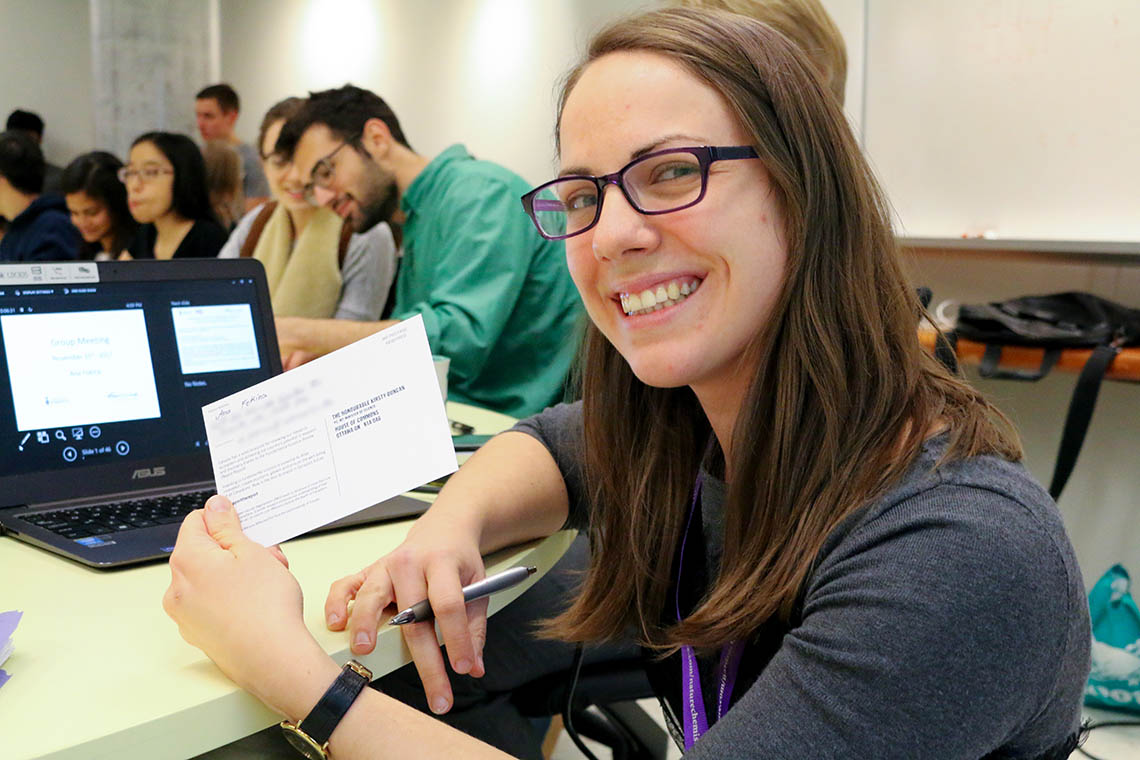
In 2016, the Government of Canada launched the Fundamental Science Review, the first of its kind in 40 years. The independent review panel, led by former U of T president David Naylor, was tasked with assessing the programs currently in place to support science and scientists in Canada. The panel found that per capita federal investment in fundamental research has slumped in recent decades and recommended a set of sweeping changes, including supporting the role of fundamental research in enhancing productivity, driving economic growth, and supporting innovation.
Go to U of T News Article
Revitalizing Research Labs
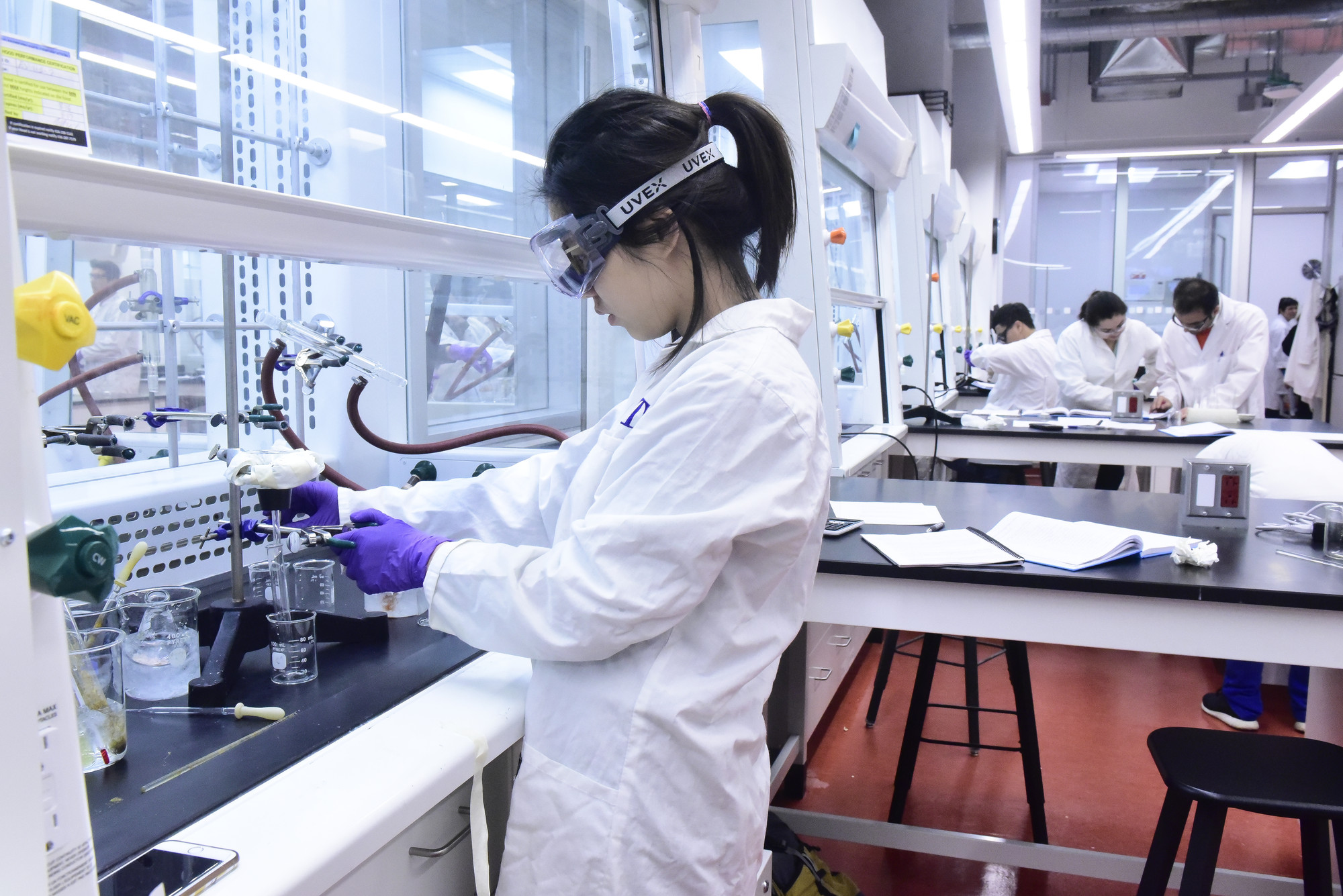
More than a year after the announcement of the Lab Innovation for Toronto (LIFT), which invested nearly $190 million in Canadian science and innovation, U of T’s revamped research labs are beginning to take shape. Over two years, the university is providing $92 million, while the federal and provincial governments are contributing $83.7 million and $14.3 million, respectively. The LIFT renovation project is benefitting all three campuses and nine academic divisions and includes medical, dental, biology, chemistry and engineering labs, and many other facilities. In total, 546 labs are being fully renovated.
Go to U of T News Article
Research Services
3,900
More than half of U of T’s research funding comes from government sources, managed by the VPRI’s Research Services Office (RSO). The largest share of federal funding is secured from the three primary federal granting agencies—CIHR, NSERC and SSHRC—while provincial funding is secured primarily from the Ontario Ministry of Research, Innovation, and Science. RSO works in partnership with faculty, staff, and academic administrators in the academic divisions to maximize U of T participation and success in these and many other regional, national, and international research funding programs, including providing new review support for SSHRC Partnership Grant applications.
The VPRI continues to be deeply engaged in the development and submission of an increasing number of applications to high dollar-value funding programs, including to the large-scale, multi-partner opportunities (e.g., the Ted Rogers Centre for Heart Research and Medicine by Design) that often involve government, private-sector and other partners, interdisciplinary approaches, and institutional commitments that span academic divisions. The VPRI assists faculty and staff so they can successfully navigate these increasingly complex opportunities, and we provide crucial oversight and coordination for these types of initiatives.
In concert with their colleagues in the Innovations and Partnerships Office (IPO) and the Research Oversight and Compliance Office (ROCO), RSO staff work closely with faculty members to ensure they achieve their research objectives while adhering to the terms, conditions, and budgetary and compliance obligations of their funding.
Innovations, Partnerships, and Entrepreneurship

Successful partnerships between industry and members of the U of T research and innovation community are crucial to our success. The Innovations & Partnerships Office (IPO) makes it easier for faculty and students to build successful partnerships that turn ideas and innovation into products, services, companies, and jobs. Our efforts continue to produce impressive results: in the past five years, the number of industry partners has grown to more than 300, while the total amount of industry-sponsored research continues to grow.
The divisions of the VPRI and the Vice-President, University Operations launched U of T Entrepreneurship’s new ONRamp facility, a 15,000-square-foot collaboration and co-working space catering to entrepreneurs and their startups. Located in the Banting Institute, ONRamp connects entrepreneurs and startups from across U of T’s extensive network of entrepreneurship hubs and throughout southern Ontario via partnerships with McMaster University in Hamilton and Western University in London. Spanning three floors, ONRamp boasts several flexible shared workspaces, meeting rooms, boardrooms, and event spaces, including the RBC Innovation Hub. The facility is supported by U of T and RBC as part of a $4 million commitment by Canada’s largest bank to support U of T’s innovation and entrepreneurship ecosystem.
IPO was also instrumental in supporting U of T applications to the federal Networks of Centres of Excellence program, which supports large-scale academically-led research collaborations, and in facilitating U of T’s contributions to proposals for the federal Innovation Superclusters Initiative. Two of these, involving cutting-edge expertise at U of T in advanced manufacturing and artificial intelligence, are among five successful proposals that will share $950 million in funding by 2022.
Accountability & Reporting
Ensuring accountability and accurate and timely reporting are crucial elements of academic research and innovation. U of T is committed to the highest standards of ethical conduct in research and looks to the VPRI to support and monitor the research process. The Research and Oversight Compliance Office (ROCO) oversees human ethics, animal ethics, financial reporting, audit and legal services, and all aspects of health and safety on 3 campuses; the Innovations & Partnerships Office (IPO) supports innovation-related audits. With the assistance of dedicated faculty and community volunteers, VPRI manages the complex sponsor and regulatory requirements that accompany academic research.
In 2017, ROCO provided extensive online and in-class safety training to more than 1,000 faculty, staff, and students per month to facilitate onboarding and to increase safety awareness and culture across all divisions. ROCO also centralized the animal user training program and moved to fully online training for basic animal ethics.
Under ROCO’s leadership, U of T and the University of Waterloo presented the 2017 U15 Research Integrity Symposium, a one-day workshop on research integrity best practices and case scenarios open to the vice-presidents of research and their staff from Canada’s top 15 research-intensive universities. More than 30 people from across Canada attended the workshop.
The Board of Laser Safety in the United States approved U of T’s Office of Environmental Health and Safety’s Laser Safety Course as a prerequisite for professional laser safety certification. Only three other organizations have Board approval to offer this course, and U of T is the only university on the list.
Community Service Innovations
Advanced Research Computing
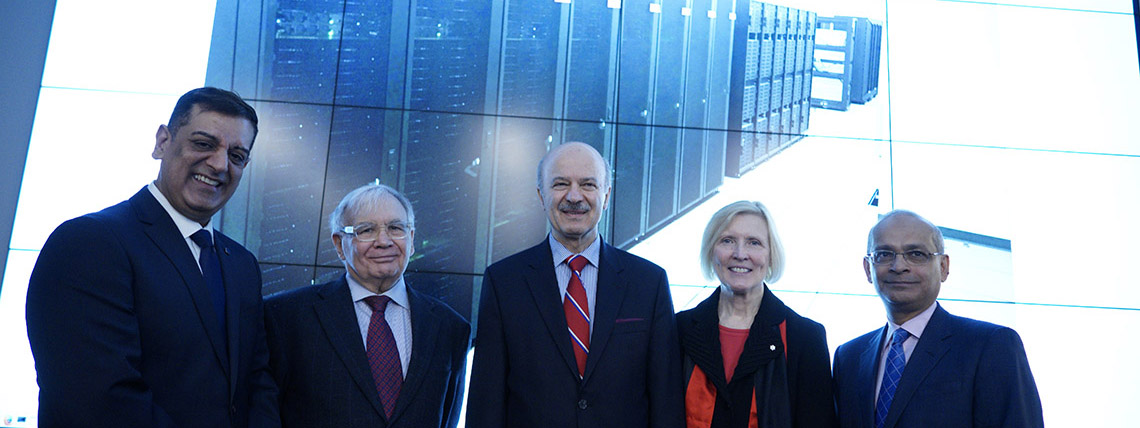
Since its inception in 2008, U of T’s SciNet has been Canada’s largest supercomputer centre. Very recently upgraded with the new Niagara system, a massive network of 60,000 cores—the equivalent of roughly 15,000 powerful desktop computers—SciNet provides Canadian scholars with the necessary computational resources and expertise to perform research on scales not possible elsewhere in the country. SciNet is part of the Compute Ontario regional organization and Compute/Calcul Canada, a national supercomputing research platform.
With the central facility located in the north end of Toronto, and offices in MaRS, SciNet has become the locus of advanced research computing training and education across U of T. It also provides our investigators access to unique research, collaboration, and innovation opportunities across an increasingly comprehensive range of disciplines and academic divisions. Now that SciNet is a continuing operation with users from across U of T divisions and campuses as well as our partner hospitals, the VPRI has become its administrative home. This new organizational model takes into account the enormous recruitment, retention, training, and support benefits that such a facility provides for all U of T researchers.
Project RAISE
The VPRI continuously seeks to improve its service by developing and enhancing innovative, state-of-the-art administrative systems and tools and providing research information analysis to support strategic research planning. In 2017, we continued to advance the Research Administration Improvement and Systems Enhancement (RAISE) initiative by launching My Research – Human Protocols (MRHP), a new online system for the submission and review of human ethics protocols. This tool provides for an easier and more efficient submissions process; centralized access, storage, and management of human ethics protocols, including remote access; an easier submission process for ongoing studies; and improved capacity to meet Tri-Agency requirements and other standards. Other projects currently underway include My Research – Intellectual Property (MRIP), which will streamline the invention disclosure and royalty distribution processes, and My Research – Agreements (MRAgr). MRAgr is an online platform similar to MRA to manage research-related agreements, such as Material Transfer Agreements, and to provide controlled access to research funding agreements to principal investigators, academic administrators, and staff.
RAISE : An integrated suite of automated web-enabled tools
Launched May 2013
Phase 1 Launched Sept 2016
Phase 2 In development
Launched May 2015
Launched Oct 2017
In development
In development
My Research Module Average Annual Submissions
3,900 applications
1,000 sponsors
1,700 funding programs
Animal Protocols (MRAP):
950+ documents
Human Protocols (MRHP):
3,600 documents est.
6,000+
$520,000
9,600+
RAISE continues to benefit the work of the VPRI and our academic units and researchers. Through a two-pronged approach — increasing the visibility of indirect cost budget requests through the controls of the My Research Applications system and automating monthly postings of indirect cost recoveries — RAISE has contributed to a marked increase in revenue for indirect costs, augmenting the impact of U of T’s Research Administration Policy.
Strengthening Administration of Research
The VPRI continues to expand its outreach efforts through the annual Strengthening Administration of Research (STAR) Conference. Approximately 200 people attended the 2017 STAR Conference, called Tri-Agency and Beyond: Strategies for Shared Challenges, which focused on issues such as principal investigator eligibility and the administration of international research grants. The conference also broadened its offerings this year to include sessions on VPRI services, resources, and tools more generally. For the first time, the VPRI also held a separate, one-day STAR Canadian Foundation for Innovation/Ontario Research Fund (CFI/ORF) workshop that explored each phase of the CFI/ORF award life-cycle.
U of T Policy Reports Collection
Many U of T researchers produce reports that make an important contribution to developing public policy issues, but because many of these reports are not published through traditional means it's not always easy to find them through standard bibliometric searches or search engines. As a result, it can be difficult for other researchers, policymakers, and our community partners to access these materials. Working with the University of Toronto Libraries (UTL), the VPRI has developed the U of T Policy Reports Collection, an online, indexed repository that contains reports authored by U of T faculty members, students, or staff. The reports address a diversity of municipal, provincial, national, and global matters that are important for the understanding of developing policy issues. The repository is available through TSpace, U of T’s online secure research repository. As TSpace is indexed by Google, Google Scholar, and other search engines, documents can reach a wider audience, potentially increasing impact and citation rates. Materials uploaded to the collection also receive a permanent URL. Authors can upload materials themselves, or submit them for uploading by VPRI staff.
Awards & Honours
257
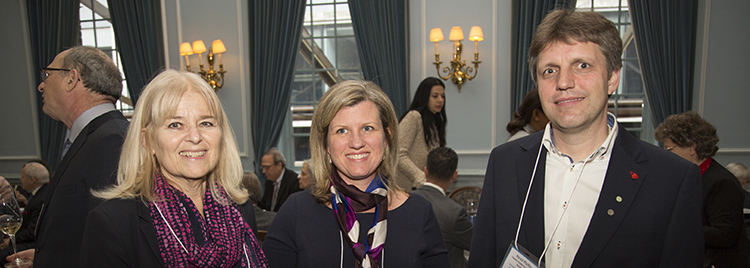
Our ability to generate ground-breaking research and innovations also helps enhance national and international recognition of our faculty and, more broadly, the university. The VPRI works closely with our academic divisions to support nominations for prestigious prizes and develop nomination strategies. We also collect and manage institutional award and honours data, inform the university community of opportunities for nominations, and celebrate the many successes achieved by U of T faculty at our U of T Salutes! reception, inaugurated in 2017. This year, Salutes! recognized more than 100 scholars across the university who received international and major national research accolades in 2017, including Killam Research Fellows, Orders of Canada, and the Keio Medical Science Prize.
Go to U of T News Article