
Engagement and Impact
As Canada’s leading university, U of T plays a distinctive role in creating and translating knowledge that responds to the important global challenges of our time.
President’s Impact Awards & President’s Impact Academy
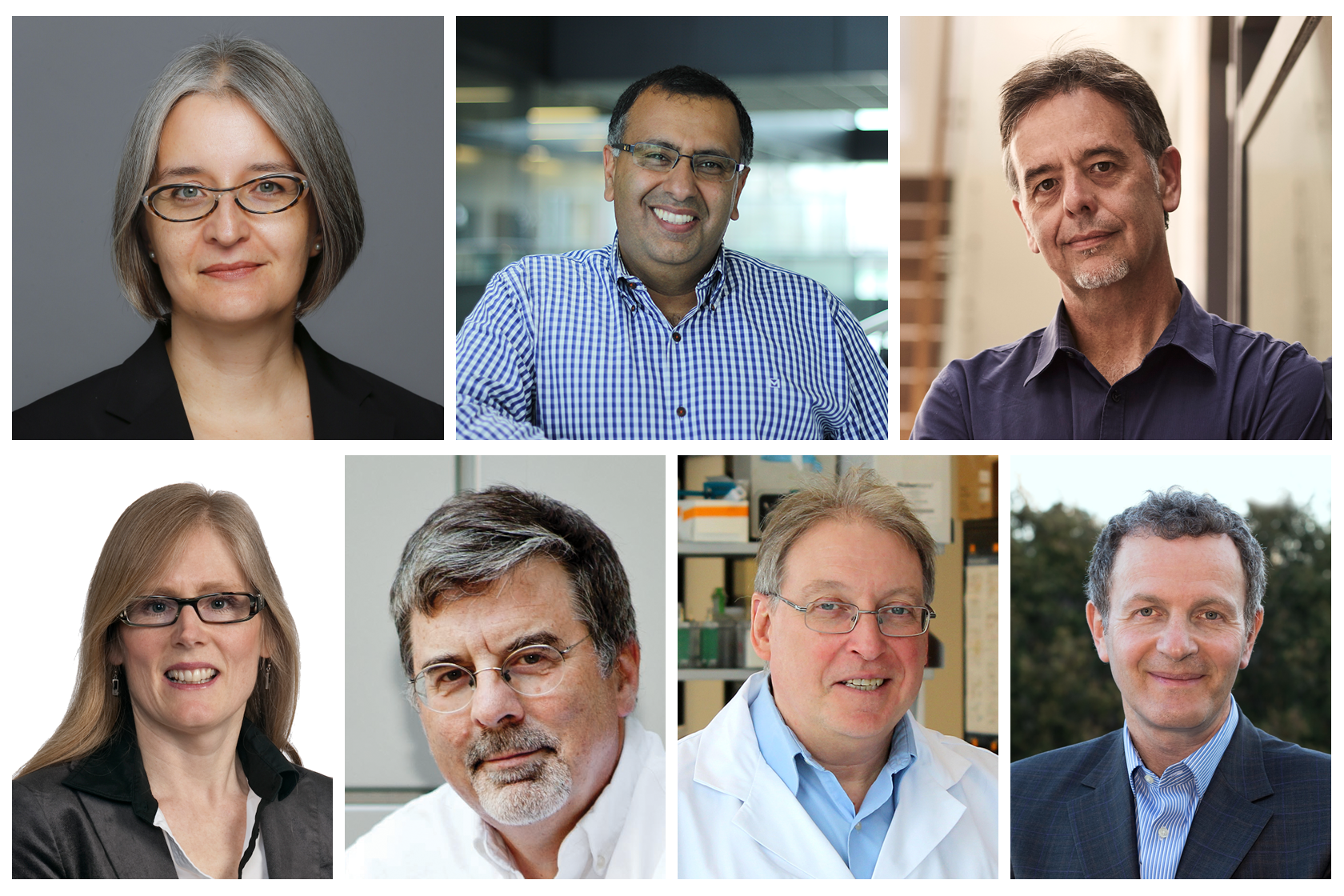
The President’s Impact Awards and President’s Impact Academy celebrate and honour faculty members whose research has led to significant impact beyond academia—on society, culture, public policy, law, professional practices, education, innovation and entrepreneurship, the economy, health, the environment, quality of life, or through public engagement. Recipients also become members of the President’s Impact Academy for at least five years. Recipients of the President’s Impact Awards whose work has a policy orientation may also be considered as a recipient of the Carolyn Tuohy Impact on Public Policy Award that is presented annually under the banner of the U of T Awards of Excellence.
Winners of the 2018 President’s Impact Awards and the Carolyn Tuohy Impact on Public Policy Award:
- Lisa Austin, professor and Chair in Law and Technology, Faculty of Law.
- Zubin Austin, professor and Koffler Research Chair, Leslie Dan Faculty of Pharmacy.
- Ron Deibert, professor of Political Science and director of the Citizen Lab, Munk School of Global Affairs.
- Kathleen Gallagher, distinguished professor in the Department of Curriculum, Teaching and Learning, Ontario Insitute for Studies in Education.
- Andreas Laupacis, professor in the Department of Medicine, Faculty of Medicine and in the Institute of Health Policy, Management and Evaluation, Dalla Lana School of Public Health and Executive Director of the Li Ka Shing Knowledge Institute at St. Michael’s Hospital. Professor Laupacis was awarded both a President’s Impact Award and the Carolyn Tuohy Impact on Public Policy Award.
- Paul Santerre, professor in the Faculty of Dentistry and at the Institute of Biomaterials and Biomedical Engineering.
- Zindel Segal, distinguished professor of Psychology at the University of Toronto Scarborough and Senior Scientist in the Campbell Family Mental Health Research Institute at the Centre for Addiction and Mental Health.

Addressing the World’s Most Pressing Issues
Our excellence in research and innovation and our multifaceted engagement with the world allow us to have the broadest and deepest impact in both scholarship and society. Our researchers can tackle the most daunting challenges facing humanity—challenges that require the multidisciplinary teams that U of T is uniquely positioned to assemble.
India's “Smart Cities”

U of T has entered into an agreement with the India Institute of Technology-Bombay and Pune Smart City Development Corporation Ltd. The partnership will focus on finding solutions to urban problems by tapping into technology-based “smart solutions” that aim not only to improve economic growth for the city, but also to create a more sustainable and resilient region. Mark Fox, distinguished professor of urban systems engineering in the Faculty of Applied Science & Engineering, will use artificial intelligence (AI) to develop a project to tackle Pune’s challenges with digital systems interoperability.
Go to U of T News Article
CHIME Telescope

The final piece of the Canadian Hydrogen Intensity Mapping Experiment, or CHIME, telescope was installed at the National Research Council’s (NRC) Dominion Radio Astrophysical Observatory in BC, creating one of the largest astronomical research instruments in the world. CHIME is the product of scientists from U of T, UBC, McGill, and the NRC, created with a $16 million investment by the Canada Foundation for Innovation and the governments of BC, Ontario, and Quebec, with additional funding from the Natural Sciences and Engineering Research Council and the Canadian Institute for Advanced Research.
Go to U of T News Article
Review of Child Care Affordability
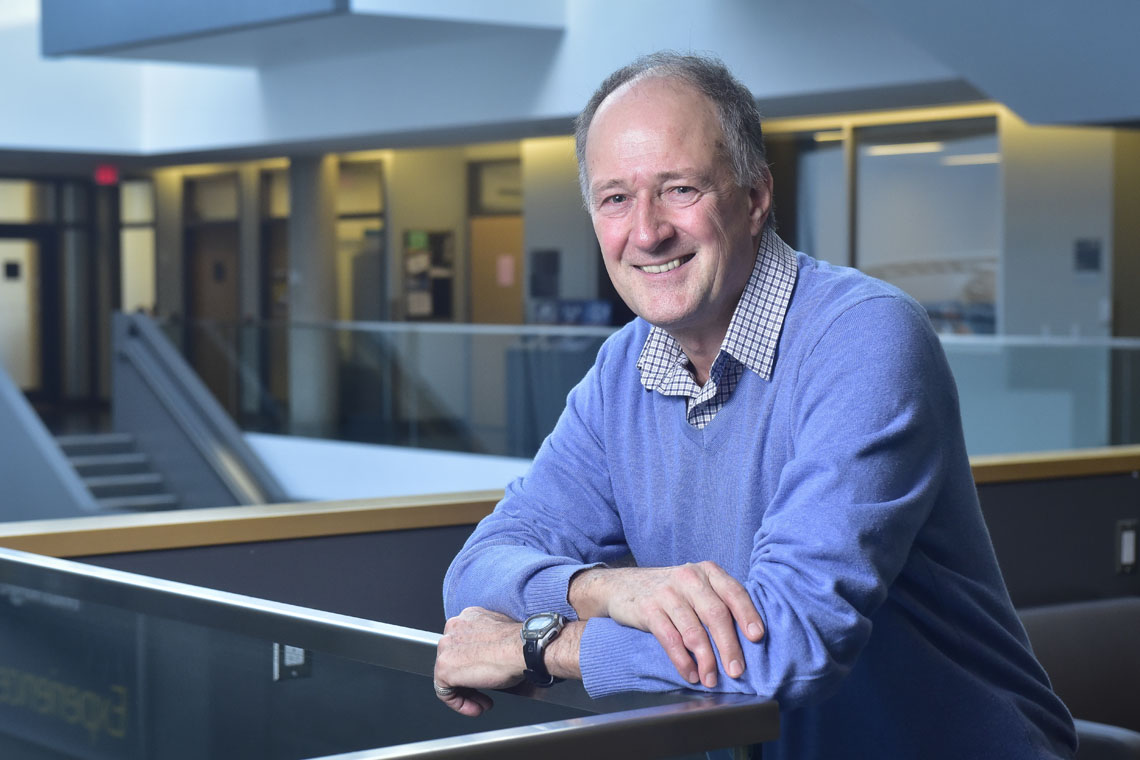
Gordon Cleveland, an associate professor of economics at U of T Scarborough, is reviewing the affordability of child care in Ontario as part of the province’s five-year plan to double child care capacity. Ontarians pay among the highest fees for child care in the country and Cleveland’s review will involve looking at what other provinces are doing. With fellow U of T professor Michael Krashinsky, Cleveland is the co-author of a 1998 study that found that every dollar invested in high-quality child care produces two dollars in social and economic benefits.
Go to U of T News Article
Connaught Global Challenge Awards

Five ambitious global projects are sharing $1.23 million from the Connaught Global Challenge Award. From tackling public health issues, to creating models for building “smarter” villages, to establishing a technoscience research lab in support of environmental data justice, all of these projects comprise interdisciplinary teams tackling the world’s most challenging and complicated global problems. The Connaught Fund is an internal U of T award designed to support collaborations among researchers, students, innovators, and thought leaders from other sectors.
Go to U of T News Article
U of T in the City
220+
U of T has tremendous breadth and depth of expertise in innovative, interdisciplinary urban research, education, and engagement. In partnership with the City of Toronto, U of T faculty and students are helping our urban region in many ways, including reaching its greenhouse gas reduction goals, developing policies to ensure that everyone has access to affordable and healthy food, and promoting Toronto as one of the world’s leading cultural centres.
U of T and the City of Toronto Agree to Support Present and Future Collaboration

U of T’s urban experts have partnered with the City of Toronto to make Toronto safer, more inclusive, and globally recognized. The partnership was formalized with the signing of a Memorandum of Understanding (MOU). The benefits of the agreement run two-ways: The Future Talks initiative, a massive U of T-based engagement project revolving around sustainability, is helping the city to find innovative ways to reduce harmful emissions by 2050. In return, the agreement allows U of T researchers access to city data that they might not otherwise know about or have been unable to access previously.
Go to U of T News Article
U of T, OCAD, Ryerson, York Collaborate on Affordable Housing

U of T is joining forces with the Ontario College of Art and Design, Ryerson, and York universities in a follow-up to a previous collaborative effort. StudentDwellTO is a new initiative bringing together almost 100 faculty and students to take an in-depth look at student housing in the GTA. The previous collaboration linked a lack of affordable housing with lower student engagement. Results of the new 18-month initiative, which will include a heavy research component and data collection from a wide-scale survey and focus groups, will be made public and incorporated into U of T courses.
Go to U of T News Article
A strong university helps build a strong city, and vice versa.
U of T Startup Lands Financing to Grow its AI-powered Legal Research Business

2017 marked two milestones for ROSS Intelligence: the company moved back to Toronto to launch its new AI Research & Development headquarters, and it secured significant funding to grow the company and stay ahead of competitors — $4.3 million in a seed round, plus US$8.7 million in the latest round of funding. The funding will allow ROSS to expand into new practice areas of law, accelerate product growth, invest in sales and marketing, and launch new products outside of legal research. ROSS is just one of several U of T startups noted in a Toronto Life feature last year.
Go to U of T News Article
U of T Brings City Together for Toronto Sustainability Summit

As part of its commitment to take action on climate change and reduce its carbon footprint, U of T brought green experts, government leaders and the city’s sustainability champions together for the Toronto Sustainability Summit. Among the sustainability leaders present at the summit was John Robinson, the university’s first-ever presidential adviser on the environment, climate change, and sustainability. They were joined by leaders from some of the successful sustainability-focused startups emerging from U of T. The Summit explored opportunities for collaboration and partnership.
Go to U of T News Article
Companies Want to Partner with U of T
U of T is known for its culture of innovation; research partnerships that span the globe, a diverse array of collaborations with private-sector and public-sector organizations, and a vibrant entrepreneurship culture supported by a network of campus-linked accelerators and incubators.
100 NSERC-CRDs


The push to increase success in NSERC’s Collaborative Research and Development Grants (CRD) program is working, with U of T now holding close to 100 active CRD grants. The program promotes well-defined research projects within the university setting, supported by contributions from industry partners having a strong Canadian presence, and a reasonable expectation of economic benefit to Canada. The program also emphasizes the training of students in technical skills advantageous for future positions within industry.
Electric Vehicle Partnership


University of Toronto Electric Vehicle Research Centre (UTEV), has secured funding from both the Natural Sciences and Engineering Research Council and UTEV’s founding partner Havelaar Canada, to run two projects jointly led by Havelaar and Professors Olivier Trescases and Peter Lehn. The funding totals more than $9.1 million over four years and it will support UTEV projects targeting disruptive technologies in both electric vehicles and associated charging infrastructure to make the next generation EVs more accessible, affordable, and intelligent.
Go to U of T News Article
Partnering with RBC


Four U of T researchers took home a combined total of $75, 000 in research prizes at the launch of Borealis AI, an RBC Institute for Research. RBC has partnered with U of T on several innovation-related efforts this year: RBC is a founding partner of a machine-learning initiative at the Rotman School of Management’s Creative Destruction Lab; they handed out $50,000 worth of prizes at U of T’s first-ever Entrepreneurship Week; and they worked with U of T Entrepreneurship to launch the ONRamp accelerator.
Go to U of T News Article
Toronto as Global Hot Spot for AI Research
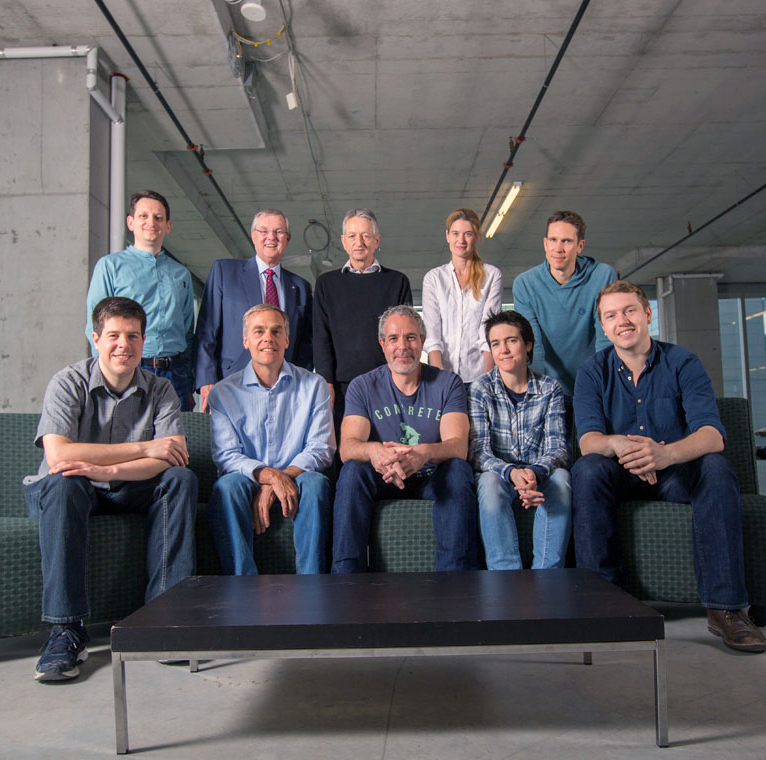
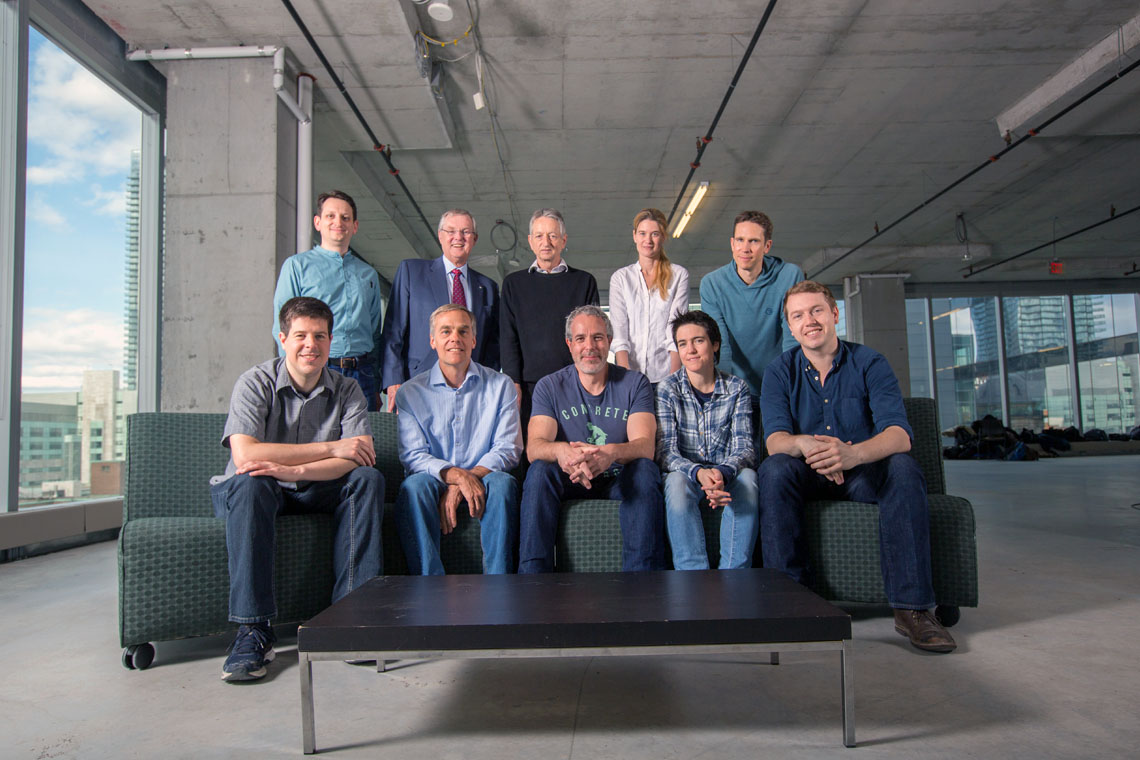
The Vector Institute brings a team of globally renowned researchers together at U of T. As part of the Government of Canada’s Pan-Canadian Artificial Intelligence (AI) Strategy, Vector will share $125 million in federal funding with fellow institutes in Montreal and Edmonton. The institutes will conduct research and secure world leading talent. Vector’s mandate includes attracting and retaining talent, as well as training the next generation of AI researchers.
Go to U of T News Article
U of T and JLABS Draw U.S. Startup to Toronto


The prospect of working with U of T professor Christine Allen drew Shawn Glinter, CEO of Nashville-based Pendant Biosciences, back to Canada. Glinter pursued a relationship between Pendant and Allen’s lab for more than a year. With Pendant now accepted into the Toronto JLABS life sciences incubator at MaRS, Allen envisions her graduate students and post-doctoral researchers moving seamlessly back and forth between Toronto's JLABS and her lab at U of T.
Go to U of T News Article
U of T Attracts Fujitsu Laboratories


As part of its move to set up a research and development centre in Toronto, Fujitsu Laboratories Ltd. will also set up an independent centre for research collaboration at U of T, led by Professor Ali Sheikholeslami. The company plans to work with U of T to “accelerate the practical use of quantum computing technologies” that can reach beyond the limitations of today’s supercomputers to tackle complex global challenges involving massive amounts of data.
Go to U of T News Article
International Collaborations

Research collaborations with international institutions and organizations help advance our research mission and translate the results of that research to the businesses, communities, and policy-makers who can make the best use of that knowledge. Together with the Vice-President, International, the VPRI launched joint calls for proposals with three international research partners: Tel Aviv University (TAU), University College London (UCL), and the Centre National de la Recherche Scientifique (CNRS). Funding awarded in collaboration with an international institution builds on the strengths of each partner and may be used to foster the exchange of faculty and knowledge through the organization of joint conferences, seminars, or short-term training courses, as well as to nurture promising collaborative research projects between faculties from both institutions. In 2017, two joint research projects with TAU, seven with UCL, and three with CNRS were awarded funding.